Friday, February 10, 2023

Broken Places Remain Broken

Terry Donnelly


            “Has it been thirty years?”

            I felt someone behind me touch the sleeve of my coat.

            The woman’s voice I could not place continued, “I’m not sure I would have recognized your back, but I remember that old pea coat. Wasn’t it your dad’s when he was in the Navy? I’m amazed you’re still wearing that thing.”

            As I turned to her I answered her second question. “Yes. I traded him a red, flannel Boy Scout jacket for it a hundred years ago. I’ve been wearing it since I was in high school.”

            The midnight blue, wool coat is the warmest winter protection I’ve ever owned. The tight knit is perfect for keeping out frigid winds and wicking away moisture. It’s even better than the modern, much lighter weight, down-filled ski jackets available today. The U.S. Navy really knew how to protect their sailors. Yet, the years had taken a toll. I still have all 10 original, Navy-issued, anchor buttons, which may actually be worth something as collector’s items. There were eight buttons on the double-breasted body of the coat and two hidden under the collar to close the open neck snugly for even more warmth and protection. Fully buttoned, with the collar turned up, that coat was a fortress against any tempest an angry ocean or revenge-seeking sea could hurl at it.  Today, the sleeves, elbows, and hem are showing abraded, faded edges that were fraying. I had a tailor sew patches on the elbows several years ago to mitigate the wear and extend the coat’s utility. Only fitting it is showing its age after Dad using it for four years in World War II and then me taking over 20 years later and sporting it for the next 30-plus winters. It had become an old, trusted friend and I wasn’t interested in making any decisions about replacing it. Even though it had a long, productive life and deserved to be retired, perhaps donated to a museum, I continued to pull it from the back of the closet each fall after the first snow with no thought of getting more stylish winterwear.

            Turning toward the voice and the touch my mind was racing. Searching for any hint of recognition. 

It took me only another heartbeat to recognize the attractive, nearly fifty-year-old woman. The face, framed by a knitted stocking cap and a shock of beautifully disheveled, wind-blown hair, rocketed me back in time. 

            I was finally able to answer her original question. “Yeah, it’s been 30 years.”

            Erin Matthews and I had been sweethearts for a majority of our high school years. We may have even had crushes on each other in junior high. She wasn’t my first kiss, that happened when I was in sixth grade when a traveling carnival had set up a half-dozen or so rides in the shopping center parking lot across the street from school one early August weekend. Among the crowd was a girl from my class; her cousin, who was visiting from out of town; and a boy I recognized, but didn’t know well. After a few rides with them, and after daylight had stubbornly agreed to ebb from the summer sky, the setting provided enough cover of darkness for us to sneak across the street onto the shadows of the school playground. We sat on a park bench and began a seemingly innocent game of Truth or Dare. It ended after a few rounds with my classmate kissing me and her cousin kissing the other boy. I think the game could have progressed. The other three wanted to continue with the game. There may well have been a few more “firsts” that night, but the kiss sent me into an adolescent panic attack and I made the excuse that I was late getting home and fled like a pheasant flushed from a corn field. I still wonder what may have happened if curiosity had triumphed over fear.

            Through no fault of mine, Erin wasn’t my other monumental relationship first either. We were late teenagers dating for several years and I’d have been perfectly happy to progress well past the variety of experimentations we explored together. But, Erin always drew a deep line in the sand, more of a trench, when we got close to actual sex. So, my time with Erin was bookended by a sixth grade first kiss before she and I started dating and a college freshman one-night stand at a Young Democrats’ convention after our time was over.

Everything else I knew about being with a woman in those early days, I learned from or with Erin.

The drives on summer, star-lit evenings away from the city to find a rural spot where the rock-and-roll, megawatt radio station every teen attempted to tune in, WLS in Chicago, could be picked up static-free on the car radio from 150 miles away; swimming in Lake Michigan; going to school dances and proms; ice skating dates on winter Fridays; being distracted due to fawning over her on the few occasions we shared a class; worrying because her period was late, even though the closest we ever got to intercourse was rubbing each other; and all the rest of a middle-class teenager’s middle American, coming-of-age experiences and drama, including professing ever-lasting love, washed over me as I recognized her and began to realize what she still meant to me––what first love would always mean.

            The last time I saw her was during the fledgling days of 1965. Attending different colleges as freshmen, we spent our winter semester break in our hometown catching up with high school friends we hadn’t seen since summer. During our time together that December, I sensed a coolness from her, but dismissed it. She had begun to assert her independence by taking up smoking, like many college freshmen, especially women. Of course, being Erin that meant being cautious. She didn’t smoke unfiltered Camels. She smoked the much milder Kool menthols. Still, a big and symbolic step. I figured her chill was just another facet of her experimenting with new-found maturity and taking advantage of freedoms––new daylight––opening up before her. 

Women everywhere were engaging in a strong and long overdue push-back against a male dominated world. I rationalized that she was simply joining with millions of other women who were on the cusp of putting themselves in positions from which they were historically shunned. I believed Erin, although not overly assertive in her personal life––the big exception to that, of course, was her firmly held absolute of avoiding having sex with me––fit right in with the philosophical sea-change that was steadily gaining momentum around the globe. I was happy for her.

She had plans with her mother and sister for New Year’s Eve. Three high school friends and I were headed to a fifth friend’s apartment for a rousing, penny-ante poker game, and an evening of catching up that included some beers on a night everyone would be celebrating. By the time I finally saw Erin, a few days into the new year, we both were ready to head back to a new college semester. I walked over to her house in the morning and talked until after noon. With all the social activity of our school break, we didn’t have much time for personal, deep discussions. I sensed something she wanted to say, but she didn’t broach anything monumental. She told me she hated her math class, was glad it was only one semester, and now over. She loved Psych. 101 and was planning to make that her major. She confessed she and a bunch of friends got caught drinking beer earlier in the semester. She had to spend a week of only going out to classes and getting meals. The rest of the time, she was to be in her dorm room. I was most surprised about her drinking beer. I continued to dismissed what was clearly avoidance behavior from her as some anxiousness. We kissed good-bye with promises to see each other soon. I said I’d hitchhike the 90 miles north to see her in a month or so.

I never did that. In mid-February, after my last class of the day, I made my routine, afternoon trip to the Olivet College student center to check my mailbox. I regularly got letters from my best friends, Gene Watson, who was at Kalamazoo College in our hometown, and Aiden Croft who had chosen Oberlin College in Ohio. We all attended small, liberal arts schools for our first steps into academia. They were both good and loyal writers and the three of us each tried to win the day by keeping the others entertained with our antics and informed of our current, and often changing, views of philosophical matters. One week, John Stuart Mill and Jeremy Bentham were the cat’s meow and the next, Utilitarianism was much too plebeian. Aiden once wrote a few pages comparing the psychological equality of Poe’s “The Telltale Heart” and Kafka’s The Trial. Gene went on making a case for Existentialist philosopher and author, Albert Camus’ opening for The Stranger: “Mother died today. Or maybe yesterday, I don’t know.”––being the perfect lede. I convinced both to read Leon Uris’s Mila 18, a poignant novel about the Warsaw ghetto in Poland during World War II. It was Uris’s 1961, lesser known follow-up to his blockbuster best-seller of 1959, Exodus. We were having a wonderful time trying to be the first to climb to the summit of Mount Sprezzatura, laying claim to being hipper than the other two.

Gene was the friend who pitched racial equality activism to me. He spent months convincing me to overcome my ambivalence and anxiety and travel South with him during the summer of 1965 as Freedom Workers and Freedom Teachers in support of voting rights. Gene sent me news clippings and kept a running monologue about how unfair a hundred years of segregationist activity was. In March I was finally convinced to enlist with him when the nation got slapped in the face with television news coverage of Bloody Sunday in Selma, Alabama. Gene and I signed on to the cause with a group out of Chicago. After a bus trip, we met other groups for a few days in Atlanta training and hearing Dr. Martin Luther King, Jr. speak. Then it was off to northern Florida for a month helping register voters and educating folks to the possibilities for a future that included voting. Capping off our efforts, on August 6, President Johnson signed the Voting Rights Act into law. Our experience that summer became the focus of my first novel, First You Hear Thunder. I’ll always be grateful to Gene for his doggedly setting me on a lifelong activist’s path.

This day there was nothing posted from either. Rather, I unearthed a nerve-shattering Dear John letter from Erin. I wasn’t prepared for it and it became the focus of my being for a couple of months. I’m not an overly sentimental sort, but the proximity of her letter to St. Valentine’s Day did not go unnoticed. She had met a man while working as a waitress at a beach-front restaurant on Lake Michigan the summer before. They had fallen for each other and she had been trying to tell me since August. Suddenly her urgent need to “be with family” and not me on New Year’s Eve and the root of her anxious behavior came into focus. When she didn’t get her task done over Christmas, she penned the letter.

That letter was the last I heard from Erin. 

I was at sea. Immediately after I began rejecting all women as evil. A short time later I saw the folly in that and switched to superficially seeing anyone I could corral into a date. I’d get a Friday night date on Friday evening during supper. We’d kiss and pet to see how far it could go, but if there were any hint of seriousness or commitment, I’d back off in a second. This pattern lasted the rest of the year and included the one-night-stand at the political convention.

Now, 30 years later and completely out of context, here she is, on Christmas Eve, with her hand on my arm in the bakery department of the local grocery store. I was at a loss trying to figure out how she found me, dismissing any chance of a wild coincidence. I live in Boulder, Colorado––had since 1977––and was visiting in Porter, Michigan, a town of just seven thousand where I had lived and taught elementary school for a few years before moving to Boulder. Porter is over 30 miles from where we had known each other. I didn’t know where she lived, but I was quite sure this wasn’t it.

The short daylight hours of mid-winter were drifting into night. Stores were closing, freeing their employees to rush home to be with families for Christmas. 

Snow was falling, lightly for now, but several inches were predicted to accumulate overnight. Perfect for Santa Claus, but not so good for night driving. 

I was in the store on a mission to get Kaiser rolls that had been missed on a shopping list earlier in the day for a party with college friends still living in the area. The group hadn’t been together for several years, and I was expected back with the goods in minutes.

            I was still confused about this whole encounter. “What are you doing here? How did you find me? This is really bizarre!”

            “I’m so sorry, Wally!” Erin skipped all my questions and poured out her heart. Her eyes became damp from tears. “I didn’t mean to hurt you with that letter. I couldn’t bring myself to tell you about Jerry and me, even when I had the perfect chance while we were talking that morning before we went back to college. I knew, right away, that summer, I loved him and wanted to marry him. I didn’t want to hurt you, but I did. I hope it makes you feel better to know that Jerry and I have been married for these 30 years and have three kids. He was the one.” 

She drew a halting breath and went on, “I knew I’d hurt you with that letter and had almost gotten over it and then your books started coming out. I was quick to read them. I read Unfinished as soon as it was published. I know that a lot of the story is about Aiden, but I also know the opening is about you and me. It broke my heart all over when I read your account. I cried for hours after reading the first chapters.” The tears staining her cheeks only made her more appealing. “Jerry kept asking what was wrong, but I couldn’t explain it to him. I can’t help fantasizing what might have been with us. I love your stories.” She wiped dry her nose and eyes with the sleeve of her coat.

            I hugged her and told her it had been a long time. What she had done was surprising and hurtful at the time, but fine. We were just kids. I forgot about the Kaiser rolls and Erin didn’t get whatever she was in the store to buy either. We walked out into the darkness to find huge, white flakes falling. The streets were mostly empty, the holiday lights that adorned the main street of town were lit and the world was quiet and stunning––a stage beautifully set for two. We looked for a tavern to have a drink. There were a couple on the block. The Stagecoach Inn was an historic building in town with an old, wooden, weather-worn double door and a facade including a large picture window created by many individual panes. The building could have easily come directly from a street in a Dickens novel. The view inside was always inviting to passers-by––especially on winter nights like this when frost encircled each pane in the big window. Even though the muntins needed a fresh coat of forest green paint, they framed a warm scene. It was my favorite stop during my stint there more than 15 years earlier. Farther down was the Copper Club, Porter’s answer to a sports bar and the closest source I’ve ever found replicating a ball park hot dog. But, they had both already closed early for the night. 

“Erin sounded certain. “We can’t go our own ways yet. I want to spend a little more time talking to you. I have a lot I’d like to know. I’ve got questions from your books.”

 We went back into the grocery store just before it closed and bought a six-pack of beer and got into my rental car.

            I opened a beer for each of us and we toasted. I’m not sure if we toasted old times, or, was it wishing each other a Merry Christmas?

            “Hey, do you still smoke?”

            She looked at me quizzically. “After 30 years, that’s what you want to know? The answer is ‘no.’ I quit in 1971 when I was pregnant with Denny, our second child. I had been reading how smoking was unhealthy for me, but especially bad for developing babies, so I quit.”

            “Did you ever smoke Virginia Slims?”

            “I know you are fishing for something here … Yes, I did.”

            “It’s not important, but when they came on the market enlisting modern women a few years after we broke up, I immediately thought of you. I always envisioned you one of the first on board with the equal rights movement, and, in my mind, Virginia Slims seemed made for you. I expected to see you in one of their ads. I vowed if I ever saw you again, I’d greet you with ‘you’ve come a long way, Baby,’ but you surprised me here and I blew my chance.”

            She tried to sound incredulous, “You never called me ‘Baby’ once in all the time we were together!”

“Maybe not, but I called you ‘Honey’ one time and you got mad thinking I called you another woman’s name. Do you remember that?”

“Maybe.”

“I just stuck to ‘Erin’ after that.”

“Well, I wish the amendment would finally pass. I worked hard for it and joined several rallies locally. You know me, I’m happy working on the committee but would rather stay out of the limelight––nowhere near a microphone. I’d be just as happy if they left my name off the program. I’m proud of what we’ve accomplished and I’m willing to do more to get this done. But, I haven’t smoked for almost 25 years––a year or so before the ERA was even passed by Congress.

            “I don’t have any deeper reason to know. I was just trying to validate my fertile imagination. Turns out you were right about not smoking. Good for you for quitting.”

            “It wasn’t easy, but my kids come first, so I was determined.”  

            There was a pause before I finally responded to Erin’s confessions in the store. “Well, you dodged a bullet by not marrying me. I’ve been divorced twice. And, I’ve been married for the third time for ten years. I have two great kids with my first wife. She, her husband, and my kids all live here, in Porter. I also have a 17-year-old step-son in Colorado. The kids are the main reason I’m here, to spend some of Christmas with them––they’re not kids, 23 and 25, but still my kids. I lived here for a few years and still have friends––college friends, Olivet is so close quite a few still live in the area; and teacher friends from when I taught here. In fact, I’m supposed to be with some of them now. I’m having Christmas brunch with the kids tomorrow. 

“I haven’t been the best father and definitely not a good husband.” Our conversation was finally turning into the deep, truthful discussion we avoided the last time we saw each other. “It has taken me a long time to settle down. Maybe a long time to grow up. I think I’m ready now, but I’ve still got a lot to prove. I’ll let you know in another 30 years if I’ve conquered that task. You are much better without me. You were settled and knew pretty much what you wanted when we were kids. I thought I did too, but I was wrong.”

            Erin cut me off by leaning across the car. She put her hand over my mouth to quiet me, then cupped her hands around my face and kissed me. Finding each other in such an odd place and seemingly out of nowhere, then finding no one on the streets on the only day of the year all the stores closed early, plus the gorgeous snowfall all seemed to be conspiring to make it feel like we were the only two people in the world. The snow had begun collecting on the windshield and side windows of the car. Our freshly formed snow cocoon added to our feelings of isolation. It felt like the world had put us in a setting where we could act with impunity. Loyalties were vanquished. Responsibilities were nowhere to be found. Without another word we both got out of the front seat of the car and slid into the back where, without the center console, we could be closer. This all felt so natural and normal––as if the span of 30 years had been but a weekend apart.

            Being close together, holding each other, felt sublime. We fit together seamlessly. The comfort and warmth were like a pair of old, thick woolen socks pulled on effortlessly over bare feet sitting before a glowing fire. We drank from our beer cans and sat, momentarily silent. The quiet spoke volumes. There were more caresses that somehow felt more right than wrong. Without any intent, I unbuttoned Erin’s coat and slid my arms inside, under her sweater. My hands felt the smoothness and warmth of the skin around her waist and back that had been both precious and familiar to me so many years ago. 

I pulled her closer. She didn’t object in any way––as if I had done something she fully expected and of which she approved.

            There was joy in holding her close. It felt warm and familiar––comforting to be so near to her. Too soon, she pulled away. Nothing was said as we both realized this was not “more right than wrong,” and tacitly acknowledged we could not go on.

            Finally, I restarted our conversation. “Hemingway wrote in A Farewell to Arms, ‘The world breaks everyone and afterward many are strong at the broken places.’ He didn’t actually mean that people are stronger after they break, but that interpretation is what many choose to believe. I don’t. My break has healed, but I’ll always have a vulnerable spot for you at the break. I don’t think that’s bad, or a character flaw, or any kind of human weakness. I like it. I think it is what allows me to write. It’s a real-life tribute to first love. I’ve got you to thank for that. Our time together and what we did as a couple, blindly finding our way, was perfect for me. When you were no longer there I had to change my arc, but I only regretted the break for a short time. I can always feel it and know it is what inspires me. It took a while and a few false starts go open up to a woman again, but the experience is what makes me me.”

            We still sat touching. Her head was on my shoulder as we talked. She occasionally lifted it so we could look at each other, but always returned to rest on my shoulder in perfect harmony. I had unbuttoned my old, frayed pea coat and Erin left her coat open as it had been earlier. I could still see the soft, smooth skin around her waist where I had lifted her sweater. Nothing seemed out of place or in need of correction.

            “I want to be a chronicler of our times. I’d like to be able to explain our normalcy right along with finding and exhibiting our uniqueness. Aiden was a chronicler with his photography. I only wish he had lived long enough for us to compare what we created. I think Aiden won the race to the top of the mountain. The photojournalism he left is likely more inspiring to more people than my writing, but I’m still seeking the words to expose who we are. I want to challenge Hemingway and say the broken places stay broken, but are not disabling. 

“Aiden got cut short. That’s the only explanation I can conjure for his vanishing act. We kept in contact for a long time and then nothing. I know he was in Beirut and I know he was using drugs. I pieced together what I could and wrote Unfinished for him. But, not just for him––it’s for me too. I’m not 100% sure he’s dead, but writing that story, no matter if my ending is right or wrong, gave me the closure I needed to make sense out of what must have happened in real life. 

“It’s like you said, Aiden’s character is twined with me––with us. Those first chapters are from our story. Aiden, Gene, you, and me. You three are the backbone of my quest in writing. You three represent all that is normal and all that is unique in my books. If you hadn’t written that letter, Kitt, Becky, and the other women characters I use wouldn’t have been available to help the chronicler.

            “I hated giving Kitt and Becky to Aiden in Unfinished. I really wanted them for myself. That is just me being selfish, but they are wonderful characters who help reveal my desire to explain the commonality and uniqueness coexisting in all of us.” 

“Wally, you need to write more. I’d love to read about your three wives and your kids and how you describe your life. Tell me. Please. I’m interested.”

            “You know, I’ve tried to write about my being a crappy husband and a mostly absent father, but it’s really hard to write about yourself as the bad guy in a story. It all comes out in undeveloped, weakly apologetic spurts of consciousness echoing the treachery of misplaced affection. I’ll keep trying. I think I make pretty good fodder for a bad guy, and I’d hate to admit that someone else needs to write it.

            “Mavis Gallant is a prolific writer for The New Yorker magazine. Do you know of her? She was a journalist in Montreal, left to see the world, living in, what she titled one of her books, Varieties of Exile. She’s been an expat in Paris for many years. She’s in her mid-seventies now, and still writes. She’s probably a little dark for your liking. The City of Light holds no light for her. She writes that Parisian food is dull and commercial. She laments the lack of ‘elegant and expensive-looking women’ in a place we all hold as a beacon of couture. Anyway, her greatest fear is ‘artistic fakery’. She had a bust of Michelangelo and one day, looking at it, thought, ‘Would he have liked me?’ Her answer to herself was, he would have tolerated her. That feeling keeps writers awake at night. My take is I have no hope of pleasing Michelangelo. I only want to be tolerated by Mavis Gallant. When I try to write about my greatest flaw, I see only ‘artistic fakery.” 

“I don’t think you could be the bad guy in a story.” Erin spoke quietly, lifting her head off my shoulder and looking into my eyes. “I believe we all are sinners, but that doesn’t mean we are fundamentally bad. If we continue to do what we believe in we’ll be accepted in the end.

“If you write the stories, they will, undoubtedly, help someone else.”

Time had passed. The snow kept falling. We both were late for Christmas Eve celebrations––I guessed, her with family, and me with friends. Now, we both were without the goods we were dispatched to bring back. My friends were without Kaiser rolls and Erin’s absence was surely troubling. But, there was still much to say before we parted.

            Erin was profoundly religious. She believed in human purpose to serve her God and be a good person in that God’s honor.

I tried to explain my take. “We are all a perfect definition of our times. We reflect, not just who we are as individuals, but we’re also the key into what our time on Earth means. We have a spirit that influences and can drive those who know and appreciate us after we are gone. That’s our everlasting life––our lasting influence on our loved ones. I can’t get it right, so I keep trying. I know there is a perfect combination of words out there that can explain us. I’m convinced the answer is simple, yet elusive. I hope the answer is a little more complicated than a corporate slogan, like Vonnegut’s ‘Progress is our most important product’ for G.E. or a bit like ‘Where’s the beef?’ from a Wendy’s ad about ten years ago. But, I’m not sure it is. That’s what makes art so compelling.”

I didn’t want to get into any discussion with her that included her faith versus my atheism and take on human spiritualism. We had that discussion many times as 17 and 18-year-olds when I was deep in the process of making that weighty decision. A decision I’ve kept and with which I am thoroughly comfortable.  But, I added, “I think it is up to us alone. We’re the ones who get to determine whether our lives were successful of a bust.”

It seemed like Erin didn’t want any extended debate about religion either. She sat mum and waited for me to continue.

“Stories with me as a bad guy could fill volumes. To start, I have to relay a complement to you that came from one of my girlfriends a long time ago. Of course, you never met, but she appreciated how you trained me.” 

“Is it that I made you put the toilet seat down?”

“Not exactly––but, I still do that.

“I first noticed her in a political science class, maybe a year after we broke up. I was a sophomore and she was a year older, a junior. She was a knockout blonde who seemed to be in perpetual motion, tightly wound with, what seemed like, saccadic movements. She was French. Her name was Reine. It means queen and she filled the part exquisitely. She was dating a deployed soldier. I didn’t know about him and asked her out. She was fine with a few dates on weekends or a vodka gimlet mixed and consumed in my car after studying during the week, but she made it clear she wasn’t interested in any commitment. That was perfect for me. I don’t think she ever broke up with her soldier boyfriend, but we ended up being a couple for more than a year. After the spring semester ended and we were on school break I drove over to her hometown 50 miles away to see her nearly every weekend. I was staying at a lake cottage south of Kalamazoo, rented for the summer with Aiden and Gene, but was smitten enough with her to make the trip often. Our relationship was like a hurricane coming. There were gentle winds at first, but in the end the gale was too much to bear. Our torch was slow to light, but lightning fast to extinguish.

“Anyway, her family owned a farm and she always preferred going back and parking in an opening on the farmland to end our evenings. She said it was safe and private and she was right. We were never discovered. What she wanted me to tell you, even though she didn’t know exactly who you are, came in the wee hours one Saturday morning as we parked after our Friday-night date. Clothes were strewn around the car and we were in the midst of breathlessly pleasuring each other. It was almost like she sat up and took a time-out in one of her cat-like moves. She said, ‘You need to tell whomever taught you how to touch a woman, she did a terrific job.’ So, there. You should be proud of your skills.”

Erin blushed, but did not respond.

“I’m the bad guy here because I always felt bad about having this affair with a woman a deployed soldier thought was his, and I was only after a conquest.”

“You felt badly about the affair. That shows you are really good.” Erin was being ameliorative. 

“You don’t have to defend me. There are so many more. My redemption may come from the fact that I didn’t sexually cheat on my wives while we were married. 

“No, that’s not true. There were one or two exceptions––there always are. I had gotten a job as a claim adjuster with State Farm Insurance. That job turned into a disaster. I was charged with representing the company, which meant I was supposed to pay out the minimum possible amount of money in claims against our insureds. I was terrible. I always ended up feeling sorry for, and siding with the claimants who were injured, incurred real expenses, and were inconvenienced without their car. I negotiated in favor of the claimants over the interests of the company. I was always asking for more money to give them rather than pay the bare bones. The bosses soon caught on and I was looking for a new job in short order. Part of my original training was three weeks at Claim School. The training took place at the State Farm home office in Bloomington, Illinois, a mostly rural setting. We were about two dozen, young, new employees, all men with the exception of one, lone woman, away from home. We went to classes during the day to learn everything about an insurance contract, small print and all, and the legal connections it had to the rights of those involved in accidents. We were supposed to study the contract and claims book procedures in the evening, but we mostly spent our evenings free to explore the bars and taverns––and women––of Bloomington. One dive bar was a particularly fun hang-out. The bar itself was built on a big, oval fish tank––it was like a NASCAR race track for goldfish. We’d sit at the bar, pick a fish with some distinguishing mark, and make bets on how long it would take the fish to complete the circuit. Another bet was for each of us to pick a different fish and see whose was fastest around the track. That was fun, but even more so was the cache of State Farm groupies who came out to tempt each class. On a couple of evenings, I joined in that game and drove my company car out into a corn field to enjoy the favors of a bored, young, Bloomington woman looking for anything to do.

“Before I got axed at State Farm, I hung around a couple guys I worked with in Kentucky in 1970 and ’71 who were real players. One of the guys actually had an alias and fake ID. He used that persona when he was out chasing women. We were supposed to remember to use his pseudonym when we were together at a bar. Naturally, after a few beers, one of us always slipped up and used his real name. He looked a lot like Warner Oland, the guy who played detective Charlie Chan in the movies, so we started calling him ‘Chan’ all the time, at work and everywhere else. His wife even started calling him ‘Chan.’ She didn’t stay his wife for long after his womanizing escalated. 

We could schedule evening meetings with people who had been injured in car accidents with whom we needed to settle claims. That would get us out of the house. We’d meet up after our appointments, if we actually had one at all, and go to bars. They most always picked up women who would take them home. I didn’t, but I did participate in drinking and dancing with women as if I were available and interested. Occasionally, I’d find someone to take outside and get into some heavy making-out in one of our cars. One of our favorite stops was a weekly meeting of a group called Parents Without Partners. It was exactly what it sounds like: a body exchange with the clubhouse being a local nightclub. We didn’t belong there because we all had kids and partners. You can’t spin any good guy scenario out of that.”

I pulled away from Erin so she had to turn her head to look directly at me. “Do you see what I mean about telling these stories? They always come out short and incomplete because they lack depth. No depth in feelings, no future, no sincerity, and no reason beyond self-gratification to tell them.

“When I started feeling my wanderlust, I divorced my wives before I took much action. They both were pretty surprised.

“Erin, what’s your story? You’ve read a lot of mine and I’m interested in what you’ve experienced. If I know more about you, I can write more about us––not necessarily you and me, but ‘us’ collectively––the phenomenon of first love.”

She returned her head to my shoulder and snuggled closer. “Oh Wally, I’m just me. I haven’t changed. You know exactly who I am because I’m who I’ve always been. I love my life. I love my family. I’ve never had lofty goals. I liked most of the jobs I’ve had, but none consumed me. I’m completely filled with being Mom and a partner to Jerry. My entire bucket list is to be Grandma. 

“Quite obviously, I have a soft spot for you. Being in this backseat with you is the craziest thing I’ve ever done.” She became coy and looked away. “That doesn’t mean I’d like to change my life. I think you are on to something real with your ‘first love is special’ theory. 

“I’m really happy and really late. I hate to, but I need to go. Do you remember how we had such a hard time saying ‘good night’ at my back door when we were kids? Well, nothing seems to have changed.” 

I pulled her back close in a warm embrace. She wrapped her arms around my neck for one more kiss. 

“I really don’t want this to end, but it just has to.” 

Erin sat back away from me and we simply looked at each other at arm’s length, soaking in what we hadn’t seen for 30 years.

She opened her door and snow fell from the car. 

“I find this all extremely personal and difficult to put into words. I’ll leave that to you.”

Erin finally straightened her sweater and buttoned her coat. During our closeness, at one point, I pulled her on top of me to hold her. She straddled my lap for several minutes and then slid off the other side. When we switched to the back seat, she got in the passenger-side door, but was now sitting behind the driver’s side, so, when she stepped out, she stepped into the street. 

“You really are better off without me,” I assured her once again through the open car door.

I watched as snow fell away to the curb when I opened my door, just like it did on Erin’s side. I stepped out into the night. The quiet had only intensified during our time in the car. The snow was still falling and I, alone, watched Erin’s blurred form walk away.

I whispered in an attempt not to disturb the stillness, “Maybe your aura will help me write this next chapter. Maybe this will be the defining one.” 

I watched every step she took and admired her presence in this misty, made-for-a-photograph scene. I wished our friend, Aiden Croft, could be here to take the picture. The festive holiday decorations were no competition to overshadow the spirit of loneliness created by a woman walking away in this dimly lit, now brumal, setting. Aiden and I could have argued for hours whether his photo or my commentary caught the essence. I longed for the chance to have that debate. 

She finally disappeared from sight and I resigned myself to the fact that I would, once again, be without her. 

“I still don’t know why you’re in Porter.”


WINTERS COME AND WINTERS GO

Terry Donnelly 


Dec 25, 2019 |  


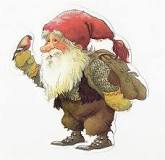
There is much joy today celebrating the spirit of Christmas Day. Tonight, homes will become quiet and peaceful in both reflection on the holiday and pensive about what is yet to come. The excitement of the season leading up to today, and the bustling activity brought the celebration to its crescendo and now will yield to night––the gateway to tomorrow. To illustrate, there is no better representation of the quiet of a content and sleeping family than the stories of the Tomten. Viktor Rydberg wrote the poem in 1881 and Astrid Lindgren retold one of the stories in her 1961 picture book with classic illustrations by Harald Wiberg.

In Scotland they are called Boggarts; in Ireland, Leprechauns; elsewhere Gnomes, or Gremlin; to Shakespeare it was Puck. Tomten are the Swedish version of solitary, mischievous sprites who lurk, out of sight, around corners, lodged in pantries, or burrowed beneath piles of hay in a farmer’s barn. They take on the awesome responsibility of protecting the welfare of homes and farmsteads. Tomten are most needed on the long, cold winter nights, especially this night, Christmas night.

The family Tomten is seen by farm animals, pets, and children, but never by adults. He is gleeful in making his presence known to the adults by leaving a small, melting dollop of snow in the hall from his tiny footprint. “How did that snow get in here over night?” the father may ask rubbing his chin in question. The Tomten often likes to hide in corners and watch Father scratch his head as he realizes he’s already read these few pages in his book. Tomten moved the bookmark. Mother isn’t immune. She wonders how her cross-stitch project got several stitches further along and whatever happened to that last swallow of cranberry juice she was saving for breakfast?      

Tomten doesn’t just tease adults. He has a long list of important tasks to perform around the farm every night. He comforts each farm animal with a silent language that they exclusively share. He can ease any discomfort of cows lowing in the barn and provide warmth for his friend the dog in his kennel by building a soft and cozy nest of straw. Tomten watches as the dog happily begins to dream of chasing rabbits and barking at birds.

Farm buildings are Tomten’s venue. He treks, seen or heard by no one, between sheds and barns. Checking to be sure all is closed up tight for the night. If he finds an open gate, he closes it with only a faint squeak from a rusting hinge and the subtle click of the latch momentarily interrupting the silence.

Tomten saves his most important duty for last––the children. He creeps into their room and through the dim illumination of the nightlight he checks to see if they are properly tucked in and safe. Occasionally one is stirring and awake. On these nights Tomten pulls up a chair and sits next to the youngster and they chat about the mysteries of life. Soon, reassured, and with a smile, the child finds blissful sleep.

He assures every child that this deep, dark, cold winter, when everything outside they love to explore and play in during summer seems to have gone forever, is simply resting and renewing for an even better spring. Spring is on the way and even though these days seem short and dark, if they pay close attention, children can see the sun shining earlier and setting later each day as a promise of warm weather on its way.

Tomten knows of such things because of his solitary life. He has hours and hours to spend in contemplation. Because he is old, his philosophy is sound and respected by the children and animals. Even though the parents do not share in his stories and comforting thoughts, he is their solemn partner in managing the farm and assisting the children along the path of the wide-world’s ways. They will remember him, be comforted, and assured by their memory of him long after they can no longer see or talk to him.

With his chores now complete and a few hours to go before the sun will begin to stir activity on the farm, Tomten wends his way back through the maze of buildings to his corner in the hayloft. There the cat is waiting. She is expecting him and the milk Tomten always provides. “Tomten talks to the cat in Tomten language, a silent little language a cat can understand. ‘Of course you may stay with me, and of course I will give you milk.’” *

Now everyone is asleep. The adults have been quiet for hours and Tomten has soothed the anxious child. Even the cat is purring, nestled in the hay, after her treat of warm milk. Everyone is asleep––everyone but one. To this Tomten the sign that summer is near will be the return of the swallows. Now, he can rest and enjoy his own dreams. “Winters come and winters go, Summers come and summers go, Soon the swallows will be here.”* He respects the quiet and knowingly smiles because, due to his care, the biting cold will not adversely affect his family. Now everyone can, in their own way, look forward to the return of the swallows.

*”The Tomten,” Astrid Lindgren.


Desert Christmas

Terry Donnelly


Wally Donovan has a rooster residing right in his head. Baby Wally rousted his parents from sleep at the earliest hint of daylight during summer months, which was okay on work days, but not so much on Saturday mornings after a Friday night party with only a couple hours in bed. That happened quite often in those days of yore when his parents were young bon viveurs. Unfortunately, winter, with its darker mornings, didn’t change anything on Wally’s internal clock. If there were something compelling ahead, sleep was always plan-B. Dad didn’t even like to talk to him about his early rising in the off chance he was doing it on purpose, as punishment for leaving him with a sitter, and, out of spite, would get up even earlier.

Throw in some anticipation and that cock-a-doodle-doo would sound in the weest of hours. And, the mother lode of anticipation for young Wally was always Christmas Day.

To kick-off this story with “Christmas Day 1955 dawned …” or “As the sun rose on Christmas Day …” would be false advertising. It must have been before five a.m., with nearly four hours of complete darkness and half a night’s sleep remaining before the sun had any intention of brightening the morning sky, when Wally awoke, clear eyed and ready to meet the day. Neither his parents nor his nearly two-year-old sister, had any such designs.

Wally simply could not stay in bed one second longer. His demons were driving him downstairs to see what was waiting around the tree. It wasn’t because he was excited about Santa coming––he didn’t believe in Santa Claus any longer. That crushing realization came to him last year during a tsunami of shattered illusions. Not just Santa, but also the Easter Bunny, the Tooth Fairy, and the patently false information dished out about a stork bringing babies were all dashed in one fell swoop. Age eight had, indeed, been a monumental year. 

All that information notwithstanding, Wally knew there would be a surprise gift or two for him because his parents wanted to be sure little sister didn’t start getting any questionable ideas. Not that a two-year-old would, but there were precautions that had to be taken.

Wally also knew there would be a price to pay for this sortie into the perimeter around the Christmas tree, but there was no turning back. 

He got dressed, shoes and all, thinking if his mom heard him she couldn’t make him go back to bed with his clothes already on. Nine-year-olds think like that. He next thought about making some cereal in a bowl to bide his time while waiting for the others. After creeping downstairs and carefully avoiding the two stairs that creaked the loudest, he glanced at the darkened tree and the shadows of presents positioned around it. He couldn’t see very well in the dark, but there definitely were more gifts there than when he went to bed a few hours before.

Somehow, the cereal began to sound like a bad idea. What if he spilled the milk or dropped the box, scattering Rice Krispies across the floor and under the stove? Clean-up would be impossible. No. The better idea would be to sit on the couch and stare silently into the darkness. Wally moved two pillows to the far end of the couch so he could recline and look toward the tree. When he laid down all he could see through the darkness without uncomfortably craning his neck was the shadowy form of the star at the top of the tree.

“This won’t work.” Again, his nine-year-old mind went into action. “Mom and Dad’s bedroom door is open, but the tree is far away from them and it really doesn’t give off that much light with those colored bulbs. If I turn them on, I’ll be able to see without disturbing them.” 

He crept around the back of the tree, being careful as he could not to step on a package or cause any kind of rustling that would alert the enemy softly snoring in the next room. Now plugged in, the tree came to life and twinkled brilliantly due to the multitude of shiny tinsel strands meticulously draped over the branches. That was Mom’s domain. She didn’t trust either Wally or Dad, to tediously place them, one strand at a time over every branch. Wally always helped hang the ornaments, but he had to leave the house when Mom got started on the tinsel. It took way too long. It seemed simply tossing handfuls in the general direction of the tree would yield the same result. Mom did not agree––at all. 

The tree was the only source of light in the house and it looked magical. Okay, back to the couch to admire the vision before him.

Wally laid on the couch gazing at the tree for three hours. He started wondering if anyone were ever going to wake up. He looked at the Timex watch his grandparents had given him last Christmas. Remarkably, he kept it safely on his wrist and, as the TV ad promised, “it took a licking and kept on ticking,” for a whole year! Upon close inspection of his trusty timepiece, he discovered, in truth, it hadn’t been three full hours, it had been thirteen minutes. “Rats!”

The next step in this ill-advised saga was as inevitable as it was predictable. Wally convinced himself he could open just one gift and no one would be the wiser. He slid off the couch and crouched in front of the tree inspecting packages, seeking one tagged for him. He found a smallish, solid, fairly heavy for its size package that read “To: Wally.” In his excitement, Wally failed to remember that his dad was also Wally and everyone didn’t tag his presents “To: Dad.” He carefully unsealed the wrapping paper, sure he had the skills to put it all back together after his sneak peek. Inside he found a dozen, shiny, white, Titleist golf balls. “That’s an odd gift for me, all I have in my bag are a bunch of beat-up Po-Dos.”

There was a new presence in the room and Wally turned, purloined golf balls in hand, and looked up to see his mom towering over him. She simply shook her head and took the box from him. She gave the To/From tag a better reading than Wally had. “These are for your father.” She stuck the tape and paper back around the box and gave the bow a fluff. The repair job was better than Wally could have done, but still not convincing enough to fool anyone there hadn’t been tampering.

Wally kept a close watch on her to judge her mood and try to determine just how much trouble he was in. At least he hadn’t scattered Snap, Crackle, and Pop all over the kitchen floor. Mom didn’t give away any clues to what she was going to do next. She knelt down next to Wally and sorted through a few packages. She handed one to him, “Here. This one is for you from Aunt Gerry and Uncle Bob. Open it and let me go back to bed.”

With that, Mom was gone as quickly and quietly as she had arrived. Wally was once again alone in the soft glimmer created by the tree lights and tinsel strands.

Unwrapping revealed a copy of Walt Disney’s Living Desert. Wally liked books, but reading wasn’t his first choice of activities––too passive. However, with few other options that wouldn’t get him in further hot water, Wally began to read. He was heartened when he found the word “naked” in the lede. Never mind that naked was used to describe barren desert hills. He read on and discovered elf owls live in holes in saguaro cacti, bobcats and peccaries live and hunt in the desert, and was surprised to learn that barrel cacti have beautiful blooms. He thought they just had stickers.

The time reading and looking at the cool photos, many of them really gross, passed quickly and soon his parents had gotten his sister up and brought her down to check out Santa’s bounty. It was only then that Wally noticed among the dolls, a doll stroller, and a tea party set, there was also a football and a baseball glove for him. There would surely be other treasures in the wrapped boxes still under the tree.

Christmas Day was, at long last, getting up a head of steam.


Epilogue: In 1953, scientists studied plant and animal life in deserts around the world and created Living Desert, a true-life adventure movie. Disney subsequently released the book in 1954, rife with photographs. Who knew Living Desert would sell through several editions over the years and a first edition copy would become a rare and valuable find 68 years later? When “Wally” received Living Desert as a gift in 1955, first editions were the only editions. I still have that copy with the inscription my Aunt Gerry penned all those years ago. It is in very good condition. Don’t ask me how I managed that.

Worthy of note is that our dear aunt is also still around––she’s almost 103 and probably in better condition than the book.

In the spirit of domestic tranquility and preservation of life (mine), I must report that four years after this account a second sister was joyfully added to our tribe. I promise to write her story––there is plenty of fodder.

I hope you enjoyed this revised format holiday letter, perhaps with a chuckle. Even better, a quick trip back in time to relive some of your own Christmas memories. 

Card photo credit goes to our daughter, Sara.

Pat and I wish you the happiest of holiday seasons.


Sunday, March 15, 2015

The dove shows his hand ...


America Needs to Pass on Middle East Involvement

By: Terry Donnelly
March 2015


Here’s the problem. 1,383 years ago the Sunnis, the largest branch of Islam, the ones who do not necessarily believe in Sharia law and can be quite liberal, split with the Shias, the second largest group with a ton of individual sects within their ranks, over interpretation of the Quran. They have been fighting ever since.

Separate from those actual religious groups, but also with Muslim members is Boko Haran a strictly terrorist movement from Nigeria, Chad, Niger, and Cameroon–not all of each of those countries, but some of each.

Next there is al-Qaeda, the militant Islamists originally formed by the likes of Osama bin Laden. They are multinational, or stateless–they don’t hail from anywhere, but seem to be everywhere. They don’t like many other Muslims, but it’s hard to tell exactly whom they dislike from day to day other than Americans.

Hamas is a Palestinian Islamic organization that is basically military.  It is banned in Jordan, itself an Islamic state, and considered terrorist by Australia, Canada, Israel, the UK and the US.

The Kurds have Iran, Iraq, Syria, and Turkey as home bases. Kurds seem to be pro America these days, but arming them could result in problems down the road if they become radicalized or switch allegiances. A “Fast and Furious” scenario could easily reoccur if we give them a ton of arms. The same is true for Syrians who want to fight ISL/ISIS/IS. Any of these groups flipping alliances and turning on the US is not that far fetched of an idea.

Most terrorist groups do not belong to or represent any state. They live within the boundaries of political states, but are not welcome in any city or village. To get out of caves and reside within a city, they have to first forcefully capture it.

National boarders in this area are almost incidental. There is more difference between northern Iraq and southern Iraq than there is between parts of Iraq and their neighbor, Syria.

When we do try to simplify this situation and focus on a recognized country, the issue does not become much clearer. Saudi Arabia has been considered an American ally since 1933 and our alliance has only strengthened under the last two presidents. The Saudi’s helped get Iraq out of Kuwait. They also support efforts against Communism. But, the Saudis are at odds with the US over Israel and many oil related issues.

Saudi Arabia along with Pakistan and the United Arab Emirates are the lone three countries to recognize the political legitimacy of the Taliban government in Afghanistan. The Taliban is an actual political movement, albeit a fearful one readily accepting of terrorist groups. Saudis sided with the Taliban even though they had a lot to do with the terrorist attack on America on September 11, 2001.

To further illustrate just how much of an ally Saudi Arabia is to the United States, a recent poll showed Saudi support for America at 38%. The rejection rate of America was also at 38%.  Apparently, 24% have mixed feelings about us.

Israel has been at war off and on, mainly on, with Palestine for 70 years. This disagreement is a microcosm of a larger Israeli/Arab hatred. Israel has come to an uneasy agreement with Egypt and Jordan, but Palestinians, another stateless Muslim group seeking a home, still fight Israelis who do not want them to have their desired state.

One of the reasons Israel is absent from much of the discussion today concerning ISIL/ISIS/IS, or whatever the name-du-jour may be, is that if Israel chimed in other Arab support against ISIL would surely wane. No Arab wants to fight on the same side with Israel.

If there is a rule of thumb in the Middle East, it is that “any enemy of my enemy is my friend.” This is not the case with Israel and a host of Kurds.

I hope you have this all straight in your mind because we are not done yet. Remember those “ton of individual sects” that were mentioned in the first paragraph? Many of them are nameless, but they all fight too. They have been fighting mini civil wars for all of those 1,383 years whether the foe is an established group/sect/clan, or some new group that challenges their thinking, usually due to an unacceptable interpretation of the Quran. When so moved, they do a 180-degree turn and start fighting against one of the groups with whom they were fighting side-by-side just last month. This move then causes other shifting allegiances depending upon who is considered the most or least offensive.

The entire Middle East and Northern Africa have been steeped in a culture of war for over a millennium. On one level war is all they know and on another, they seem to be proud it. This warring culture is one reason recruitments into terrorist groups are so successful. To be a warrior is a badge of honor.

All of these people, save the Israelis, have Islam as an historic common denominator.

Therefore, to refer to the groups that are perpetrating archaic atrocities as Muslim/Islamic terrorists or Muslim/Islamic extremists is not technically wrong. To do so though is akin to referring to the Ku Klux Klan as Christian terrorists or Christian extremists. Nearly every Klan member claims Christianity as his religion, but what they practice is nowhere near Christian ethos. To use the term Christian is playing into the Klan’s hands. They’d love to be validated as a recognized Christian organization–a significant status bump. The same–the exact same–reasoning is true with Muslim or Islamic characteristics being applied to the groups beheading/burning/slaughtering innocent captives today. They all would like to be thought of as religious sects when they are not. President Obama is right in simply calling them common, everyday terrorists–not one word more.

America has a culture of world leadership and we are rightfully proud of that status. We would like nothing more than to broker a lasting peace in the Middle East and Northern Africa. The mass killing has to stop because it is barbaric and something civilized nations cannot tolerate.  Western cultures would like nothing more than to fumigate the region and let freedom ring for all citizens who would like to be law abiding and live a life of choices. But, we can’t. Every military action; whether it is with a drone, a soldier fighting on the ground, or a dollar spent is a total waste.

We’d help if we could, but as repugnant as it is, we gotta keep our noses out.

Historically, on the odd occasion we succeeded in getting rid of a corrupt government, more often than not, the succeeding leader was worse than the one before. Thoroughly corrupt rulers like Saddam Hussein and Muammar Gaddafi were awful, evil men, but they kept a lid on their charges. When deposed, both countries got worse than they had. The charming political phrase is that  “at least the despots kept the sh-- at shoe level.”

Unfortunately, the Middle Eastern war culture is too deep. Relationships and allegiances too shifting Talks of peace or compromise too temporary. And, any truths from today, too unstable for there to be any chance of winning a war or establishing peace.

When Russia, the largest, most structured, and best organized government in the                               area, shoots a political dissident dead in the streets, we need to take heed and realize that, as much as we’d like to, there is nothing we can do. We need to spend our time and treasured resources on defending our country from here and solving our social problems at home.

Saturday, March 14, 2015

In Celebration and Remembrance: Selma, Alabama, March 7, 1965


Edmund Pettus Today, Tomorrow, Forever

By: Terry Donnelly
March 14, 2015

Sometimes being a writer is just too easy. Every now and then we get to grab some low hanging fruit that makes plying our trade seem like child’s play.

The recent March 7th 50-year remembrance/celebration on the Edmund Pettus Bridge in Selma, Alabama provided just such eye-level apples.

By now we all know that the Edmund Pettus Bridge was the scene of Bloody Sunday, the day Selma Sheriff Jim Clark got his fifteen minutes of fame by having his sworn-in thugs (a.k.a. police officers) beat the daylights out of marchers who were trying to march to Montgomery in peaceful protest over the extreme voting discrimination practiced in the Old Confederacy. Jim Clark, like his governor, George Wallace, was an unabashed segregationist. Governor Wallace famously spoke the words “segregation today, segregation tomorrow (it sounded more like ‘tomarra’), segregation forever” from the steps of the administration building on the University of Alabama campus, and Clark was fond of sporting a jazzy pin on his uniform that read “Never”. The pin succinctly held the same message as the governor’s words.

The low fruit for writers–the far too easy irony that lingers in history is the bridge that represents the turning point in the successful quest for eliminating savage laws that effectively kept black voters out of polling places–an icon now revered as sacred ground to those repressed, is named after a Confederate General and Grand Dragon of the Ku Klux Klan.

To be sure there were a ton of Klan members on that bridge that day. They were not decked out in their spiffy white robes and hoods, but they were there, many toting both badges and clubs. None of them were marchers. The Klan members and Sheriff Clark may have celebrated that day, but their elation turned to defeat on August 6 that same summer when President Lyndon Johnson signed the 1965 Voting Rights Act into law. Coupled with the previous year’s Civil Rights Act, all legal barriers were torn down. Citizens were henceforth-banned form exercising public segregation in any form.

The drama of the day is well recorded. What is missing is the back-story.

During his time in office, President Johnson had many conversations with Rev. Martin Luther King, Jr. Some were cordial, some edgy, but there was always respect on both sides and a mutual desire to undo Jim Crow laws.

In the months prior to the Selma to Montgomery march, Johnson told King that he really wanted to get the Voting Rights Bill passed and signed that summer. But, he needed some help by getting the public to back the bill and flood his office with requests to do so. LBJ charged MLK with coming up with that public outpouring of support.

King had long ago learned the power of media. Ever since Emmett Till’s mother put her son’s badly beaten body on display after he was killed by Klan members in 1955 for whistling at a white woman, any media display of horrific actions by segregationists (think 1961 Freedom Rides complete with bus burnings) was met with public outrage.

It is highly suspected that MLK planned the march, knowing full well that his group would meet resistance from Sheriff Clark and possibly get the media attention LBJ wanted to spur the public into vocal support; in turn getting Congress to act. I will not go so far as to suggest that MLK knew just how strongly Clark would react, but in its infancy the march that spurred Bloody Sunday was as much a political calculation as a nonviolent protest.

After his conversation with Johnson, King and his team got busy planning. On March 7th MLK led his organized protestors onto the Edmund Pettus Bridge. Clark overreacted much like was expected, and mega media coverage ensued. LBJ got his public outcry, Congress acted, and Johnson got out his pens on August 6th.

After that date everyone could vote and a genius provision, Article 4 of the act, gave the federal government jurisdiction over the states’ voting laws to quickly act on any digression or backsliding on the intent of the law. The drafters knew any loophole would allow some states to restrict access to the polls.

The 1965 Voting Right Act worked exactly as planned for almost 50 years.

Those laws stood in tact and were proudly and publically renewed in their original form by presidents of both parties protecting civil rights until June 25, 2013 when the Supreme Court of the United States made a critical error in judgment. Five of those nine judges naively stated that “things have changed dramatically” in the South over the last 50 years and foolishly deemed Section 4, the check and balance guts of the act, to be no longer needed to monitor the voting laws in former bad behaving states and counties. Not surprisingly, it took only two months in 2013 for several states that for 50 years had to pre-clear any voting regulation changes with the federal government to start proposing new, un-reviewed, and obviously discriminatory laws to once again restrict segments of the population from voting.

There is some defensive noise about the new laws being designed to keep the polling places free of fraud (there is none in the U.S.), and that one needs a photo I.D. to rent a car or get on an airplane, so what’s the big deal about having one to vote? Those arguments are lame when compared with the magnitude of the importance of citizens having free access to the franchise. Besides, the words of the perpetrators themselves belie any such argument. Pennsylvania House Majority Leader Mike Turzai was checking off Republican political successes in a 2012 speech and included “voter ID, which is gonna allow Governor Romney to win the state of Pennsylvania, done (accomplished).”

The true motivation for changing voting laws can’t be any clearer than that. If the states are truly protecting the integrity of the polling place, why didn’t they submit the changes for review years ago?

I don’t advocate changing the name of the Edmund Pettus Bridge. The situational irony is too appealing to suggest altering how we discuss history. But, restoring Article 4 of the 1965 Voting Rights Act is a much needed cause to champion. 

Tiger Woods Part I

I was asked by the publisher of "Let's Talk Nevada" to do an article about Tiger and his influence on golf. I got carried away and ended up submitting a two part column. I didn't know I had that much to say.


Part 1: What Tiger Woods has meant to golfers

By: Terry Donnelly

Eldrick “Tiger” Woods.

Seeing that name in print or hearing it over the airwaves brings on an intense reaction from nearly every person who has been conscious the last 20 years. There are a handful of celebrities who are recognizable by one name and who rest upon the absolute pinnacle of society. Woods is more than a sportsman; he is a transformational modern culture icon.

Okay, that said, those intense reactions run the gambit from loving to loathing, from superstar to subhuman. Tiger Woods made himself into a massive brand that transcends any one individual. However, when the individual showed himself as a mere mortal, he has both failed, bringing upon himself immense scorn; and reached great heights with his foundation for kids and humanitarian acts. When working within his field, the 18 holes of a golf course, he has few, if any, peers.

It is because of this celebrity that those involved in news and discussion outlets (including myself) choose to focus time and words on this charisma laden media magnet.

Love him or hate him there are a few facts that cannot be denied. If you hate him for his apparent misogynistic leanings, or are tired of seeing only his shots on Sunday afternoon television while the rest of the field plays behind the scenes, or you want him to succeed because he represents a level of expertise possibly never before achieved, or you want the field to rise to the challenge; all of those opinions must stem from a series of facts.

The overriding fact here is that Tiger Woods changed the game of golf for golfers. There are basically two men who can claim that mantle since Mary Queen of Scots got hooked on the game in the 1500s. Woods is, of course one, and the other is Arnold Palmer.

Palmer came along in the early 1950s. At that time professional golfers were second-class citizens who changed their shoes in the parking lot and were considered entertainment for the golfing gentry. Sam Snead, one of those always mentioned when the word “greatest” is uttered within a golf conversation, played for over 40 years and won a record 82 professional tournaments from 1931 to 1973. During that time he won exactly $712,972–second place in last year’s Masters Tournament won more than that.

Then along came Arnold and his army of fans in 1952. Actually Arnie’s Army came later as fans flocked to watch him play whether it was in person or on the new outlet for golf–television. An equal measure of Arnie and TV moved the needle on how professional golfers were treated and the kind of living they could make at the game. The winner of the 1952 Masters Tournament won $4,000. When Arnie won his first in 1958, he won $11,250. By 1980, 22 years later when Arnie was all but done with competitive golf and had worked his magic, the winner took home almost five times that amount–$55,000.

The mix of television and Arnold Palmer brought about a new era for professional golf. The television contracts and the throngs of people who flocked to tournaments around the country put money in the coffers and the share for each participant began to rise. Golfers quickly went from traveling by carpool from tournament to tournament and having to live by their wits as well as their clubs, to being household names who flew on chartered (or in Arnie’s case his own) jets. The pros knew it too. To a man they realized that Arnold Palmer had singlehandedly gotten them all a raise in pay and a boost in status. To this day they all call him “The King” behind his back and “Mister Palmer” to his face.

Fast forward to 1996. The game had grown even more thanks to the continued efforts of Palmer and others like Jack Nicklaus and Deane Beman who were smart and handled the affairs of golf’s celebrity well. When a young man named Tiger Woods won his first Masters Tournament in 1997 his first place prize was $450,000, about eight and a half times what Seve Ballesteros won in 1980.

What happened next is almost unexplainable. When Tiger won again in 2001, his paycheck for the weekend at Augusta was $1.1 million. After only four years of Tiger being in the field, the purse had more than doubled and last year’s 2014 winner, Bubba Watson, pocketed $1,440,000. The purse of the Masters has tripled since 1996 when Tiger Woods burst onto the golf scene.

Television was already a big part of golf, so Woods didn’t have the novelty factor of the tube to help him change the face of golf once again.

In 20 years, the last three of which Woods had hardly played at all due to injuries and other self inflicted personal woes, he redefined what it meant to be a top golfer. In those years he has amassed 79 victories (three short of Snead who took over 40 years to win his 82), 14 major tournaments with 18 being the standard set by Nicklaus, and an eye popping $110 million in prize money. That laps the field in any comparison. Phil Mickelson is second on the all time money list at $75 million–$35 mil short. Fifth place is $48 million and 10th is $37 million–pocket change to Woods. Arnold Palmer is 388th on this list with a miniscule $1.8 million. Any modern player who is around for even a couple of years has won much more than Palmer did in a star-studded career.

I’m done writing about the super stars. What about the average Joe on the pro tour these days–the guy that goes to work on the links every weekend and shoots a round of par each time. If there were such a golfer he would have earned $2,111,425 last year. That number is a bit skewed because of the US Open, which is made rigorous to the point of ridiculous every year and a score of par, can win. Take away that one million dollar paycheck and our par shooting pro pockets over one million dollars and never shot a score in the 60s all year.

Suffice it to say that all pro golfers’ boats have risen with the flood of interest that Tiger Woods brought to the game. He is a transformational super star of the highest magnitude whether you like the way he runs his personal life or his approach to the game.

Will he best Snead’s 82 career victories? Likely. Will he surpass Nicklaus’ 18 majors? Doubtful. Will he retire from the game after his recent crash-and-burn disaster of a comeback? Not going to happen. Will he ever regain the respect he held after the year 2000 when he produced maybe the best golfing year ever? No.

So, Woods’ golfing future seems to be a mixed bag. But, like Palmer, the other pros know Woods has vastly improved their bank accounts, and set a higher bar for their golf skills as well.

Golfers and the game of golf are better for having Tiger prowl among us.


Tiger Woods Part II


Part 2: What if Tiger becomes extinct?

By: Terry Donnelly


What would a sports/media world with a Tiger Woods void look like?

We already have a fairly good idea.  Answer #1: boring.  Answer #2: costly.

It has been since August 4, 2013, over 18 months, since Woods has won a tournament and nearly seven years since he won the 2008 US Open, his last major tournament.

He isn’t only not winning–he isn’t even playing.

Media speculation is high about Tiger Woods and his achy back and/or damaged psyche. He remains a physical specimen equal to Adonis, albeit with an Achilles back. And, was once given credit for reducing other players to Jell-O with his mind. That isn’t the case any more. Tiger’s “No Fear” has turned into other golfers’ “No More Fear.”

When in his prime … it seems odd to be speaking of Woods’ prime in the past tense, and that may be premature–which was the eight years following the turn of the millennium, Woods dominated both the sports page, the lifestyle page, and occasionally, even the front page. His every move on and off the course was micro-scanned and commented upon.

His was a Midas touch seldom seen in any genre.

First, he brought throngs kids stampeding to the game. Golf is not a game to which youngsters will ever flock on their own accord. Many come to the game through family and learn to love it through that avenue. But, Tiger made golf cool. His charisma had kids sending their parents to the sporting goods stores for junior sets of Nike (Tiger’s long time sponsor) clubs, golf balls, gloves, red shirts for Sunday play, and, of course a TW or swoosh laden hat. Those kids then followed Tiger onto the golf course. The influx of fresh faces made the game’s future seem as strong as Tiger’s short game.

The First Tee is a foundation that operates in all 50 states and several foreign countries. It provides leadership and support for kids playing golf. It was established in 1997, just as Woods was coming onto the scene. With Tiger as a spokesperson, First Tee programs were flooded with over nine million kids participating. The program is still vital today, but First Tee fairways are not as crowded these days. Other young, golfing stars like Ricky Fowler, who has all the traits (game, looks, style) to get kids to go gaga over him, are leading the advertising. But, kids don’t go gaga like they did for Woods. In the early 2000s every golf-related television program was supported by a First Tee ad. That is not so today. Much is the pity. The First Tee got inner city kids into real golf for free. It still does, but the numbers today pale. Kids are vital to the future of the game and without Tiger, the game’s Pied Piper, in the headlines, the rosy future is now a bunch of shades of gray.

Next is the fact that Tiger’s influence went far beyond kids. Adults all sported the hat and the Swoosh too. Other manufacturers got in on the payday by offering bright colors and stylish clothing to catch the golfers’ eyes. New and improved equipment was coming out of the golfing R&D departments at a frenzied pace. All in the name of “hitting it like Tiger.” Business boomed. Now that Tiger isn’t playing, any old driver will do.

There are still Tiger Woods columns that pop up nearly daily, but they are mostly wishful or mournful. They deal with his injuries, whether or not he will remarry, speculating about his future, and Ouija Board analysis about whether he will ever return as Sampson. Every media writer wants Woods back. He makes good copy whether he is behaving badly in Vegas or on the course knocking down flag sticks seeking yet another record.

The biggest money loser seems to be television. When Woods was winning he played in about 18 to 20 tournaments out of 45 offered each year. Advertisers courted those lucky 20 and millions of viewers spent weekend afternoons in front of the tube looking at green grass after their morning round was over and bets settled. When Woods was not in the field, the numbers were way, way down. Now that he is not playing at all, golf television’s yearly bottom line is in serious trouble. The Masters, one of the most prestigious tournaments, played on one of the most beautiful courses in the world–the tournament that eschewed most sponsors just because they could–was far off its own over-the-top, Woods-in-the-field viewing rates. Even if Tiger wasn’t winning, as long as he was playing people watched in droves. TV viewers may not have even known who was leading. It didn’t matter; the cameras were steadfast on The Man.

When Tiger Woods is playing well, he enriches himself. But, far beyond that, he enriches his sponsors, the media, the PGA, the other players, the PGA charities (of which there are many), and most importantly, the golf industry in general because when Tiger plays the days are sunny and everybody loves golf.

There have always been good, even great, players competing. Their names are historical and their skills envied. However, as mentioned in Part 1 of this column, there are few transformational figures. Arnold Palmer was the first god-like figure in golf’s over 500-year history. As skilled and as fine an example Jack Nicklaus was and remains today, he never made that kind of impact.

Then came Tiger. He dominated news–not just sports news–all news for nearly 20 years. He wasn’t just on the cover of golf magazines like Sports Illustrated and Golf Digest; he was on the cover of GQ, Vanity Fair, Vogue, People, Time, and Newsweek–most of them multiple times–over 100 in all.

If he doesn’t return to at least a near equal to his former stature, golf is likely in for some really tough times. Someone else will eventually come along who can end the drought and inspire the dreams of golfers, but that golfer, as talented and as sexy as many of them are, just doesn’t seem to be on the scene today.

In over 500 years there have been two saviors, Arnie and Tiger. And, if it takes as long as it did to get an Arnold Palmer in the game, hundreds of years, the game will be gone. If Mr. or Ms Golf Hero can come along in the next generation or two, as long as the game keeps its pulse, there is hope.

I’m rooting for Tiger to be the phoenix.